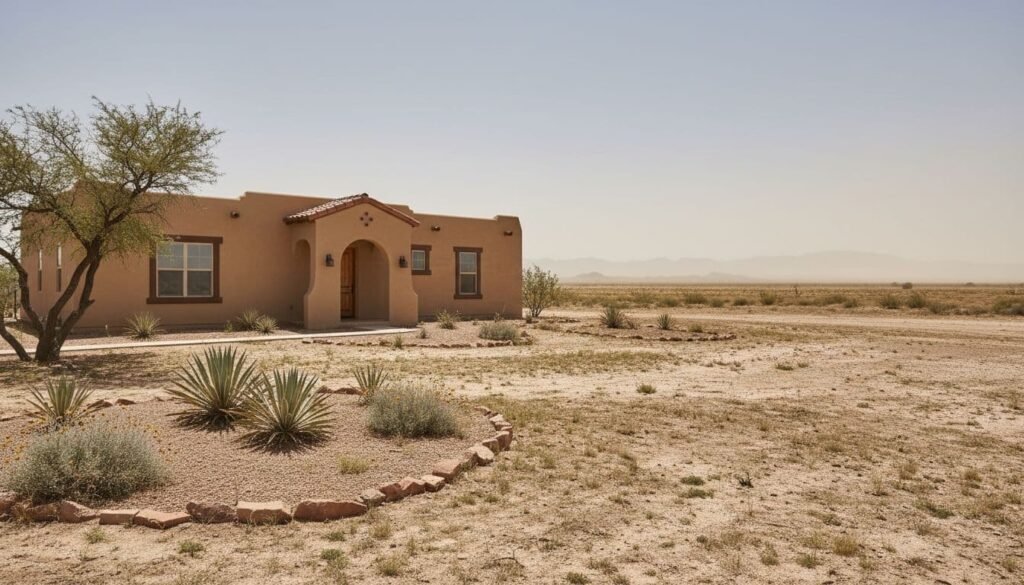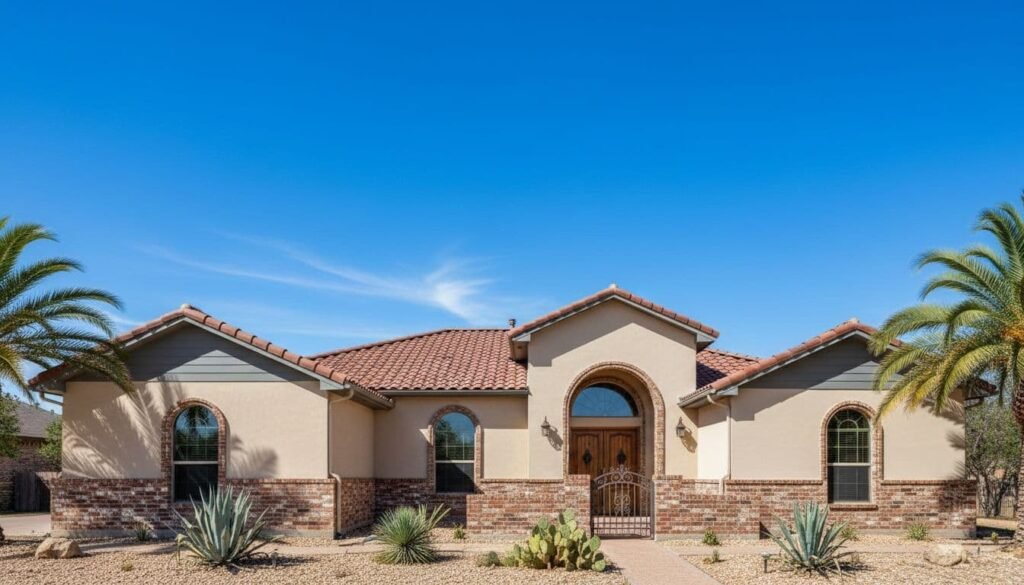
South Texas sun is no joke. Laredo walls bake for months at a time, then cool fast at night. That constant stress can chew through cheap paint in just a few years.
If you pick the wrong exterior paint, Laredo’s weather will punish it. Colors fade, stucco cracks show through, and siding starts to peel long before it should.
This guide breaks down which paint types last on stucco, brick, and siding in our hot, dry, high‑UV climate. You will see what works, what fails early, and how to talk with a painter or paint store in clear, simple terms.
How Laredo Heat and Sun Break Down Exterior Paint
Summer highs in Laredo often sit above 100 degrees. UV levels stay high most of the year. Walls can hit temperatures much higher than the air around them.
Here is what that does to paint over time:
- Binders in weak paint break down, so the color looks chalky and dull.
- Dark colors get very hot, so they crack and peel sooner.
- Stucco and siding expand and shrink day after day, which opens up hairline cracks.
Low humidity, plus dust and wind, also matter. Dust sticks to soft or chalky paint films. When you try to wash it, more pigment comes off. I see this a lot on the south and west walls in neighborhoods like Del Mar Hills and Los Presidentes.
The right paint type will stand up to this abuse longer, hold color, and peel less, as long as the surface is prepped the right way.
Best Exterior Paint Types for Laredo Homes
When you compare exterior paint in Laredo stores, the label terms can get confusing. Focus on the resin type, not just the brand name or the price.
The main choices for our climate are 100% acrylic latex, elastomeric coatings, masonry paint, and a few oil or hybrid products for trim.
100% Acrylic Latex: Workhorse for Most Exteriors
If you remember one thing, make it this: 100% acrylic latex is the go‑to for most Laredo exteriors.
Why it holds up well here:
- Strong UV resistance, so color fades more slowly.
- Good flexibility, so it moves with stucco and siding without cracking as fast.
- Breathable enough for stucco and masonry when paired with the right primer.
- Easier to touch up and repaint than oil paint.
Use quality 100% acrylic latex on:
- Stucco that does not need heavy crack filling.
- Fiber‑cement siding.
- Previously painted brick that is in sound shape.
- Wood trim and fascia when the manufacturer allows it.
Skip cheap “vinyl acrylic” or contractor‑grade paints on the label. They break down faster under Laredo sun and start to chalk early, even if they look fine the first year.
If you want help matching products to your house, Laredo exterior paint experts like the team behind Exterior house painting services in Laredo work with these systems every day.
Elastomeric Coatings for Stucco With Cracks
Elastomeric paint is a very thick, rubber‑like coating. It is made to stretch and bridge hairline cracks in stucco.
Pros in Laredo conditions:
- Great at hiding small spider‑cracks and block texture.
- Strong water resistance on vertical stucco walls.
- Helps reduce water intrusion on wind‑driven rain days.
Common problems when it is misused:
- Can trap moisture in stucco if walls are not dry or details are poor.
- Harder to repaint later, since not every product bonds well to it.
- Not a good choice for wood siding or trim.
I like elastomeric for older stucco with many hairline cracks, as long as we fix drainage issues first and use a compatible primer. For new, clean stucco, a high‑build 100% acrylic is usually enough.
Masonry Paint for Brick and Block
Masonry paint (sometimes called “elastomeric masonry” or “acrylic masonry”) is designed for brick, block, and concrete.
Good qualities for Laredo:
- Handles the higher pH of masonry.
- Often more breathable, so brick can dry out.
- Bonds well to tight, smooth masonry when primed right.
Use masonry paint on:
- Bare brick or block you are painting for the first time.
- Concrete walls, stem walls, and foundations.
- Parapet caps that see heavy sun and rain.
Avoid very dense, non‑breathing coatings on brick in our climate unless a pro specifies them. Trapped moisture behind brick can cause peeling, spalling, or white salt deposits.
Oil‑Based and Hybrid Alkyds on Trim and Metal
Straight oil‑based house paint has faded in popularity in Laredo for good reasons: it yellows, chalks, and gets brittle faster in strong sun.
That said, oil or hybrid alkyds can still make sense on:
- Metal railings and steel doors.
- Rust‑prone areas that need strong primers.
- High‑wear handrails and some front doors.
Most homes do better with water‑based acrylic trim paints, but a painter might still choose an oil or hybrid for tough metal spots.
Matching Paint to Stucco, Brick, and Siding
Here is a quick overview before we talk prep and details.
| Surface | Best paint type | Backup option | Common issues in Laredo |
|---|---|---|---|
| Stucco | 100% acrylic latex or elastomeric topcoat | Acrylic masonry paint | Hairline cracking, chalking on sunny sides |
| Brick / Block | Masonry acrylic | 100% acrylic latex over primer | Efflorescence, peeling on damp walls |
| Siding | 100% acrylic latex | Masonry acrylic on fiber‑cement | Fading, peeling on west walls |
Stucco: Hairline Cracks and Chalk
Stucco is common in Laredo and it takes a beating. The main enemies are hairline cracks, chalking, and strong surface heat.
Prep steps for stucco:
- Wash off dust and loose paint with low pressure and cleaner.
- Check for chalk by rubbing it with your hand. If it comes off, use a chalk‑binding primer.
- Seal cracks with elastomeric caulk or patch, not cheap painter’s caulk.
- Prime patched areas, then spray and back‑roll for even coverage.
Use flat or low‑sheen acrylic on large stucco walls. Flat hides texture problems best. Low‑sheen or “eggshell” gives better washability on busy areas without showing every bump.
Elastomeric topcoats work well on older stucco, especially on west and south walls that keep cracking.
Brick: Breathability Matters
Painted brick can look great, but it is less forgiving. Once you paint brick, you are repainting for life.
Good prep for brick in Laredo:
- Check for moisture issues, like soft mortar, peeling near grade, or white salt. Fix those first.
- Clean the surface with low pressure, not harsh acids.
- Spot prime bare areas with masonry sealer or primer rated for high pH.
- Fill big gaps in mortar, then apply two coats of masonry acrylic.
Stick with flat or low‑sheen masonry paint for main brick walls. High‑gloss on full brick walls shows every defect and can peel sooner where moisture tries to escape.
If you want more detail on prep and product choices, the Laredo painting guides for homeowners walk through common home projects in simple terms.
Siding: Fiber‑Cement, Wood, and Vinyl
Siding often heats up faster than masonry, especially on second stories.
For fiber‑cement siding:
- Use high‑quality 100% acrylic latex.
- Caulk joints with paintable, flexible sealant.
- Choose lighter colors for the west and south walls to cut heat stress.
For wood siding:
- Scrape all loose paint and sand rough edges smooth.
- Prime bare wood with a strong bonding or oil‑based primer.
- Use satin or semi‑gloss on trim, low‑sheen on large wall areas.
For vinyl siding:
- Only paint colors close to or lighter than the original color. Dark new colors can warp panels in Laredo heat.
- Use paints labeled as safe for vinyl.
Best Sheens and Colors for Harsh Laredo Sun
Sheen and color make a big difference in how long paint looks fresh.
For walls:
- Flat: Hides flaws, but chalks faster and holds dust. Good on older stucco if you accept more washing.
- Low‑sheen / eggshell: Nice balance of hiding and washability. A strong choice for most Laredo exteriors.
- Satin: A bit more shine and cleanability, works on smoother siding.
For trim and doors:
- Semi‑gloss: Holds up well to hand oils, dust, and splashes.
- Gloss: Use with care on doors or details if the surface is very smooth.
Color tips for Laredo:
- Lighter colors reflect more heat and fade more slowly.
- Soft beiges, warm grays, and off‑whites work well in bright sun.
- Deep reds, dark browns, and navy blues fade and show lap marks faster, especially on west exposures.
Maintenance and Repaint Timing in Laredo
Even the best paint in Laredo needs care. A simple plan keeps your home looking sharp and avoids big repairs.
General inspection schedule:
- Walk the exterior once a year, spring or early fall.
- Look for chalking, peeling, hairline cracks, and soft or rotten trim.
- Rinse walls with a garden hose and soft brush where dust builds up.
Typical repaint cycles in our area:
- Quality acrylic on stucco: about every 7 to 10 years, sooner on dark or sun‑blasted walls.
- Masonry paint on brick: 8 to 12 years if moisture is managed.
- Siding and trim: 5 to 8 years, depending on color depth and sun.
When you pair good prep with Exterior house painting services in Laredo, you can often stretch those numbers toward the longer end.
For decks, fences, and other exposed wood, stains and clear coats need more frequent attention. You can learn about long‑lasting wood finishes on this page on exterior wood protection in Laredo, TX.
Final Thoughts: Choosing Paint That Can Handle Laredo Sun
Laredo weather punishes weak paint, but a strong, durable paint system holds up for many years. Match 100% acrylic, elastomeric, or masonry paint to the right surface, and use light to mid‑tone colors that handle heat.
Take time on washing, repairs, caulking, and primer. Then choose sheen based on how your walls are built and how much traffic they see.
Bring these points to your next talk with a painter or paint store. A short, informed talk now can save you from early peeling, faded walls, and surprise repaint bills later.