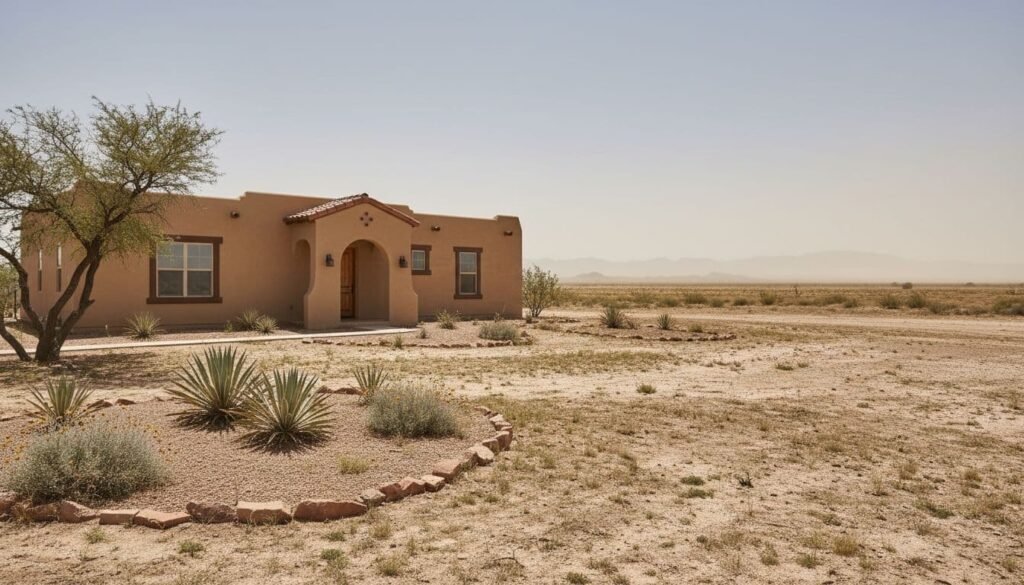
If you’ve ever washed a stucco wall in Laredo and watched a fresh layer of dust stick to it an hour later, you already know the problem. Our wind can turn a clean surface into sandpaper fast, and paint doesn’t forgive sandpaper.
Good stucco wall prep is less about fancy tools and more about timing, cleaning the right way, and keeping the wall clean long enough to prime and paint. Do that, and your finish can look sharp for years, even with sun glare bouncing off the wall all summer.
Why Laredo’s wind and dust ruin paint faster
Stucco has peaks and valleys. Dust settles into that texture like flour in a dish towel. If you prime or paint over that grit, the coating bonds to dust instead of cement. Then the sun heats the wall, the coating expands, and weak spots start peeling.
Wind also causes a second problem: it dries the surface unevenly. That sounds good until you realize a skin forms on caulk, patch, primer, or paint while moisture is still underneath. Trapped moisture leads to blistering and chalking later.
Start with an honest stucco check (before you wash)
Before water touches the wall, walk it slowly and mark problem areas with painter’s tape.
Look for:
- Chalky residue: Rub a dark cloth on the stucco. If it turns white, the surface is chalking and needs extra cleaning and the right primer.
- Efflorescence: White, salty crust that looks like powdery streaks. It’s a moisture and salt issue, not “dirt.”
- Cracks: Note hairline cracks versus wider, moving cracks.
- Hollow or loose spots: Tap the wall. A hollow sound can mean delamination that needs repair before painting.
If you have active leaks (roof edge, window flashing, hose bibs), fix those first. Painting over a water problem is like putting a new label on a leaky bottle.
Cleaning stucco safely in a dusty, windy climate
Pressure washing that won’t damage stucco
Pressure washing can help, but it can also drive water behind the stucco if you’re aggressive.
Safe baseline practices:
- Use a 25-degree or 40-degree fan tip, not a zero-degree tip.
- Keep pressure in a moderate range (often 1,200 to 2,000 PSI is enough for stucco).
- Hold the wand 12 to 18 inches from the surface.
- Keep the spray moving, and avoid blasting directly into cracks, vents, and trim joints.
- Wash from top to bottom, but rinse thoroughly so dirty water doesn’t streak and dry on the wall.
If the stucco is older or already cracked, use a garden hose with a jet nozzle and a stiff nylon brush instead. Slower, but safer.
Use the right cleaner for the right problem
One cleaner doesn’t solve every stain. Match the product to the issue:
- Dust and normal grime: Mild detergent or a siding and stucco wash, plus brushing.
- Mildew or algae (shady areas, north walls): Use a labeled mildew remover. Follow dwell time, then rinse well.
- Grease (restaurants, outdoor kitchens, near dumpsters): A degreaser is non-negotiable. Grease blocks adhesion.
- Efflorescence: Dry-brush first, then use an efflorescence remover or masonry cleaner made for salts. Rinse thoroughly. Don’t trap leftover cleaner in the stucco.
If you want a practical overview of common stucco prep steps, this guide from Family Handyman is a solid reference: How To Paint Stucco.
Dry time in Laredo heat (what’s realistic)
Hot weather dries the surface fast, but the wall can still hold moisture in pores and hairline cracks.
General expectations in warm, low-humidity conditions:
- After washing, plan on 24 to 48 hours of dry time for most stucco.
- After heavy soaking, shaded walls, or thick texture, plan 48 to 72 hours.
- Don’t guess. If the wall feels cool and damp in the morning, it’s not ready.
Fix cracks the right way (hairline vs larger cracks)
Crack repair is where a lot of paint jobs win or lose.
Hairline cracks (static, tight cracks)
These are common around window corners and long sun-exposed walls.
- Open the crack slightly with a scraper if needed, then brush out dust.
- Use a high-quality paintable exterior elastomeric or urethane acrylic sealant for hairline cracking.
- Tool it in, don’t just smear over the top.
- Let it cure. In hot weather, it may skin quickly, but still needs about 24 hours before priming, longer if it’s deep.
Wider cracks (about 1/16 inch and up), or cracks that move
If the crack opens and closes, caulk alone often fails.
- Cut out loose edges, and undercut slightly so the patch can lock in.
- Patch with a stucco patch compound or a cement-based repair made for stucco.
- For deeper voids, build in layers so it cures evenly.
- Typical cure time is 24 to 72 hours, depending on depth and product. If it stays soft, don’t paint it.
If cracks are recurring in the same spot, look for movement at control joints, foundation shifts, or framing issues. Paint won’t stop that.
Prime for breathability, bonding, and chalk control
Stucco needs a primer that grips and still lets the wall release water vapor. That’s the “breathable” part. If you seal stucco too tightly, moisture pressure can push paint off later.
Good primer goals:
- Breathable masonry or stucco primer to handle vapor.
- Binder strength to lock down light chalking after proper cleaning.
- Even porosity, so your finish coat doesn’t flash and look blotchy.
For primer selection basics and why stucco primers differ, this overview is helpful: Choosing the Best Stucco Primer.
If your stucco is chalky even after washing, don’t skip primer and don’t “just add another coat of paint.” Use a primer designed to bond to masonry, and consider a second spot-prime on stubborn areas.
How to stage the job so dust doesn’t undo your work
In Laredo, timing is part of stucco wall prep.
When to avoid painting due to the wind
As a practical rule, avoid priming and painting when winds are strong enough to carry visible dust across the yard.
Here’s a simple go or no-go guide:
| Condition | Better Choice | Why it matters |
|---|---|---|
| Sustained winds above ~15 mph, or gusts above ~20 mph | Wait or switch to indoor work | Dust embeds in wet primer and paint |
| Midday wall surface feels hot to the touch | Paint earlier or later | Paint can dry too fast and lose adhesion |
| Forecasted dust events or blowing dirt from nearby lots | Reschedule | Recontamination happens fast |
Keep blown dust off cleaned and primed stucco
- Wet the ground near the wall before you work. Dry soil becomes a dust generator.
- Use canvas drop cloths instead of light plastic when it’s breezy. Plastic flaps in the wind and makes dust harder to manage.
- After cleaning and drying, do a quick final wipe with a soft masonry brush to knock off settled dust.
- Prime the same day you do the final dust-off, if weather allows.
- If you must stop overnight, avoid leaving bare, freshly cleaned stucco exposed. Plan the work so you can clean, dry, and prime in a tight window.
A staging rhythm that works well here is: wash early day 1, dry day 2, repair late day 2, prime day 3 morning, paint day 3 late morning or day 4. Adjust based on shade and texture.
Safety notes that matter on stucco exteriors
Stucco prep makes dust, splash, and grit. Protect yourself.
- Respirator or dust mask when brushing chalky stucco or sanding patches.
- Safety glasses during pressure washing and scraping.
- Gloves for cleaners, especially mildew removers and salt treatments.
- Ladder basics: set on stable ground, keep a 3-point stance, and don’t overreach. Avoid working in moderate to high winds.
Also, protect landscaping. Many cleaners can burn plants. Pre-wet any nearby greenery and rinse it after.
Day-of-Paint Prep Checklist (quick and practical)
- Check wind and dust conditions, reschedule if it’s whipping.
- Confirm the stucco is dry, not cool or damp.
- Brush off settled dust from the texture and ledges.
- Re-check crack repairs, patch should be firm and fully cured.
- Spot-prime repaired areas, then prime as planned.
- Mask windows, doors, and fixtures, secure coverings so they don’t flap.
- Keep foot traffic and pets away from dusty soil near the wall.
- Start on the shadiest side first and avoid painting hot stucco.
A clean, dry, repaired wall is the whole job. In Laredo, the wind will test your prep within hours. Get the stucco wall prep right, and the paint has a fair shot at lasting. Need a professional? Check out the exterior painting page and reach out to schedule an estimate.